
Topic : « La Russie renforce ces liens avec le Mali »
 hallavar
Grosse carte ça le Mali, c'est vraiment un atout qu'on ne peut pas se permettre de perdre 


 AgharAlThor
Petit à petit l'oiseau fait son nid 

C'est déjà perdu pour l'Afrance.

Citation de hallavar
Grosse carte ça le Mali, c'est vraiment un atout qu'on ne peut pas se permettre de perdre
C'est déjà perdu pour l'Afrance.
 Pseudo supprimé
la France en sueur qui rage sur les russes 
 Seducteur
Citation de Raditzytb
https://twitter.com/silbo[...]4kKYlUpfFB2mCbvg&s=19
Les cartes se redistribuent petit à petit
C'est un bon

 Doomamer
Vous vous rappellez de la francophonie 

 CuckCake
Mais si on perd le Mali où ira-t-on récupérer nos nègres ?!! 


 Raditzytb
Citation de SerCelestin

AZAWAD
TOUC TOUC TOUC
AZAWAD
TOUC TOUC TOUC
AZAWAD
TOUC TOUC TOUC
AZAWADD
 PainPerdu
Citation de hallavar
Grosse carte ça le Mali, c'est vraiment un atout qu'on ne peut pas se permettre de perdre
Si ça tenait qu'à moi les français ils rentreraient en France et basta, on en a rien à péter du Mali, on est pas la plus grosse puissance pourquoi c'est à nous d'aller s'occuper d'eux ?

On va juste échanger nos rations de combat pour 3 espagnoles
 Seducteur
Xi Jinping rencontre le président iranien Ebrahim Raïssi
Le président chinois Xi Jinping a rencontré son homologue iranien Ebrahim Raïssi vendredi matin au complexe Forumlar Majmuasi à Samarcande en Ouzbékistan.
Il a souligné que la Chine et l'Iran entretenaient une amitié de longue date et que leurs relations avaient résisté aux vicissitudes d'une conjoncture internationale mouvante.
Consolider et développer le partenariat stratégique global liant les deux pays est le choix stratégique commun des deux parties, a dit M. Xi.
La Chine considère ses relations avec l'Iran dans une perspective stratégique et à long terme et se tient prête à accroître sa communication et sa coordination stratégiques avec l'Iran pour réaliser de nouveaux progrès dans les relations bilatérales, a souligné le président chinois.
M. Xi a indiqué que la Chine soutenait l'Iran dans la défense de sa souveraineté et de sa dignité nationale et travaillerait avec ce pays pour faire respecter le principe de non-ingérence dans les affaires intérieures et les intérêts communs des pays en développement.
Les deux parties doivent déployer des efforts actifs pour mettre en œuvre leur plan de coopération global, faire progresser la coopération dans le cadre de l'Initiative la Ceinture et la Route (ICR) et s'efforcer d'obtenir davantage de résultats dans leur coopération, a-t-il poursuivi.
Notant que l'Iran était invité à rejoindre l'Initiative pour le développement mondial (IDM) et l'Initiative pour la sécurité mondiale (ISM), Xi Jinping a déclaré que son pays le félicitait d'être devenu membre à part entière de l'Organisation de coopération de Shanghai (OCS) et se tenait prêt à une coordination et une coopération plus étroites avec lui dans le cadre de l'OCS.
La Chine continuera de participer de manière constructive aux négociations sur la reprise de la mise en œuvre du Plan d'action global conjoint (PAGC) et soutiendra l'Iran dans la défense de ses droits et intérêts légitimes et légaux, a-t-il souligné.
Pour sa part, M. Raïssi a noté la profonde tradition d'amitié entre l'Iran et la Chine et la grande importance stratégique de leurs relations bilatérales.
Téhéran est fermement déterminé à renforcer sa coopération avec Beijing à tous les niveaux et à intensifier les échanges à divers niveaux pour développer davantage le partenariat stratégique global Iran-Chine, a-t-il assuré.
L'Iran, a poursuivi le président iranien, est convaincu que sous la direction avisée du président Xi, la Chine défendra efficacement sa souveraineté nationale et son intégrité territoriale et atteindra son grand objectif de bâtir un pays moderne.
L'Iran apprécie la position de la Chine qui défend l'équité et la justice dans les affaires internationales, a dit Ebrahim Raïssi.
L'Iran étant désormais membre à part entière de l'OCS, lui et la Chine seront davantage en mesure d'intensifier leur coopération dans des cadres multilatéraux aux niveaux régional et international, selon lui.
Enfin, l'Iran soutient la coopération dans le cadre de l'ICR, de l'IDM et de l'ISM et est disposé à travailler plus étroitement avec la Chine pour maintenir un véritable multilatéralisme, a conclu M. Raïssi.
Ding Xuexiang, Yang Jiechi, Wang Yi et He Lifeng étaient présents à cet entretien.
http://french.china.org.c[...]9/16/content_78424073.htm
Seducteur
Iran Says Determined To Boost Ties With Russia 'At All Levels
Relations between Tehran and Moscow are strategic and Tehran aims to boost ties at all levels, Iran's president said Thursday in a meeting with Vladimir Putin.
On the sidelines of the Shanghai Cooperation Organization (SCO) summit in the Uzbek city of Samarkand Thursday,President Ebrahim Raisi assured his Russian counterpartthat Tehran will never recognize the sanctions against Russia and will strengthen and develop its trade and economic relations with Moscow.
“Our relations are not ordinary; they are of a strategic nature. Iran wishes to expand its strategic relations with Russia and all political, economic, trade, and aerospace areas,” he told the Russian President. Raisi Also stressed that Tehran- Moscow cooperation can “neutralize” the effects of US sanctions on both countries.
President Raisi and his government consider relations with Moscow and Beijing and Iran’s full membership in SCO a powerful tool in overcoming US sanctions and their effects which have hugely affected the Iranian economy since 2018 when former US President Donald Trump pulled out of the 2015 nuclear agreement (JCPOA) and slapped crippling sanctions on the country.
"The relationship between countries that are sanctioned by the US, such as Iran, Russia or other countries, can overcome many problems and issues and make them stronger," Raisi told Putin in the meeting.
"The Americans think whichever country they impose sanctions on, it will be stopped, their perception is a wrong one."
That is exactly what critics of the Biden Administration policy of reviving the JCPOA argue. Freeing Iran from US sanctions will open a back door for Russia to violate Western sanctions imposed on its energy exports and international banking. Already the two countries have deals for natural gas and oil swaps, which can help disguise Russian energy exports.
Iran has also supported Russia's invasion of Ukraine and has delivered military drones to Moscow. Recent images from Ukraine show Iranian suicide drones being used in the war.
For his part, Putin announced in the meeting that a Russian delegation of 80 large companies are to visit Tehran next week now that Iran has signed documents pertaining to full membership in SCO.
The Russian President said Tehran and Moscow actively cooperate on the international arena and their positions “coincide” on many issues. He added that many joint projects are moving forward “thanks to Supreme Leader Ali Khamenei’s support.” “We are interested in his further support,” he said.
Referring to Iran’s membership in SCO, Iranian foreign ministry spokesman Nasser Kanaani said in a tweet Wednesday that Iran “acts dynamically, intelligently and balanced in realizing the strategic goals of its foreign policy and expanding its foreign relations” but “does not wait for the JCPOA and the return of the United States to its JCPOA commitment” despite adhering to the talks for the restoration of the deal.
SCO approved Iran's application for accession last year at a conference in Dushanbe, Tajikistan, in September after many years of a slow process.
In a tweet Wednesday, Foreign Minister Hossein Amir-Abdollahian who is accompanying the president said he had signed a memorandum of commitments to join the organization as a full member, calling a "new phase" of economic, trade, transit, energy, and other cooperation with the body.
https://www.iranintl.com/en/202209160361
Seducteur
China, Russia hold meeting on law-enforcement, security cooperation
Guo Shengkun, a member of the Political Bureau of the Communist Party of China (CPC) Central Committee and Secretary of the Political and Legal Affairs Commission of the CPC Central Committee, co-chairs the 7th meeting of the China-Russia law-enforcement and security cooperation mechanism with Nikolai Patrushev, secretary of the Security Council of the Russian Federation, in southeast China's Fujian province, Sept. 19, 2022. [Photo/Xinhua]
Guo Shengkun, member of the Political Bureau of the Communist Party of China (CPC) Central Committee, Monday co-chaired the 7th meeting of the China-Russia law-enforcement and security cooperation mechanism with Nikolai Patrushev, secretary of the Security Council of the Russian Federation, in east China's Fujian province.
Guo, also secretary of the Political and Legal Affairs Commission of the CPC Central Committee, said under the strategic guidance of the two heads of state, the China-Russia comprehensive strategic partnership of coordination for the new era has maintained a momentum of sound and steady development.
Since the establishment of the law enforcement and security cooperation mechanism, China and Russia have cooperated closely in areas such as safeguarding national political security, anti-terrorism, drug control, and combating transborder crimes. The mechanism has achieved fruitful results and played an irreplaceable role in safeguarding the sovereignty, security, and development interests of the two countries, Guo said.
Guo said China is willing to work with Russia to implement the consensus reached by the two heads of state during the SCO Samarkand summit. China will give full play to the role of the law enforcement and security cooperation mechanism to meet various security risks and challenges.
Patrushev said Russia is ready for closer exchanges with China at all levels to create a sound security environment for the smooth development of bilateral cooperation in various fields.
http://t.m.china.org.cn/convert/c_rt76JNpP.html
Seducteur
Russia crushes Ukraine’s ‘counteroffensive’ with Iran’s super-weapon
Ukrainian forces seem to be on cloud nine after the Russians reportedly retreated from many positions that they were previously holding. The western media is propagandizing the development as a triumph for Zelensky’s forces and also Turkey’s Bayraktar TB2 drones.
The Zelensky camp does not want the world populace to know that attacking and retreating is an efficient war strategy for obvious reasons. It was used extensively during the second world war by both the opposing parties. Nevertheless, the west would like to solidify the narrative that the Russians are done.
Moscow is reportedly gearing up for a significant offensive in some of the Ukrainian strongholds that would trigger the fall of the Zelensky regime. Putin has been playing the game on a lighter note since the operation began in February this year but it looks like the dynamics are now changing.
Naturally, the advent of advanced weaponry from the US to help Ukraine has indeed made things tricky for Moscow and that is exactly why Putin has designated an Iranian superweapon on the battlefield to destroy the US weaponry as he makes a move against the Ukrainian forces.
Ukraine claimed that Russia recently introduced Iranian drones and used them extensively for the first time since the onset of the conflict in late February. The Iranian Kamikaze drones, also known as ‘suicide drones’ have created new dangers and inflicted serious damage to the Ukrainian Armed Forces, the Wall Street Journal (WSJ) reported.
Col. Kulagin, commander of the artillery of Ukraine’s 92nd Mechanized Brigade, stated that the Iranian drones have already destroyed two 152 mm and two 122 mm self-propelled howitzers and two BTR armored infantry vehicles, in the operational area of his brigade.
Iranian-made kamikaze drones are unmanned aircraft that don’t fire missiles but are missiles. They are capable of circling above a target and waiting for the perfect moment to strike with incredible precision.
These drones are reportedly inflicting extensive damage on Ukraine’s inventory. It looks like, lowering confidence in the Russian forces triggered by false western propaganda had possibly irked Putin who then eventually decided to unleash the drones.
The new Iranian drones pose a potential threat to Ukrainian command centers, artillery, air defense, logistics and other military targets, as well as critical infrastructure. Putin, being an experienced commander, has opted to approve additional expenditure in the form of drones to destroy critical infrastructure rather than risking his soldiers to carry out the task.
The advent of drones also marks an exciting development as the Ukrainian forces previously deployed the very infamous Turkish Bayraktar TB2 drones. However, the drones proved incapable in front of the Russian defense systems that eventually diminished the demand for the Turkish made drones.
On the other hand, the Iranian drones have turned out to be a dangerous weapon on the battlefield. This eventually makes things difficult for the West as it gives the Iranians major leverage over the global drone industry. Moreover, the Russians could now possibly back Tehran in legitimizing its nuclear program as a gesture of goodwill.
All things aside, as for now, Iran’s Kamikaze drones have taken over the battlefield and Putin seems to love it.
https://tfiglobalnews.com[...]h-irans-super-weapon/amp/
 Seducteur
Le groupe E3 cherche à détruire l'industrie nucléaire de l'Iran, selon le chef de l'OIEA
Le plus haut responsable du secteur nucléaire iranien a accusé lundi le groupe E3, composé de la France, du Royaume-Uni et de l'Allemagne, de chercher à détruire l'industrie nucléaire iranienne, a rapporté l'agence de presse semi-officielle Mehr.
Malgré les signes indiquant qu'elle est prête à parvenir à un accord avec l'Iran, l'intention principale de l'Europe est en réalité d'isoler l'Iran, a affirmé dans une interview télévisée Mohammad Eslami, président de l'Organisation iranienne de l'énergie atomique (OIEA).
Les Européens se servent de la question de l'accord sur le nucléaire pour gagner du temps afin d'affaiblir l'Iran et de s'opposer à sa production de combustible nucléaire, qui renforce le pays, a-t-il ajouté.
Concernant la coopération de l'Iran avec l'Agence internationale de l'énergie atomique (AIEA), M. Eslami a déclaré que l'Iran avait pleinement informé l'agence de toutes ses activités nucléaires.
http://french.china.org.c[...]9/20/content_78428418.htm
 Seducteur
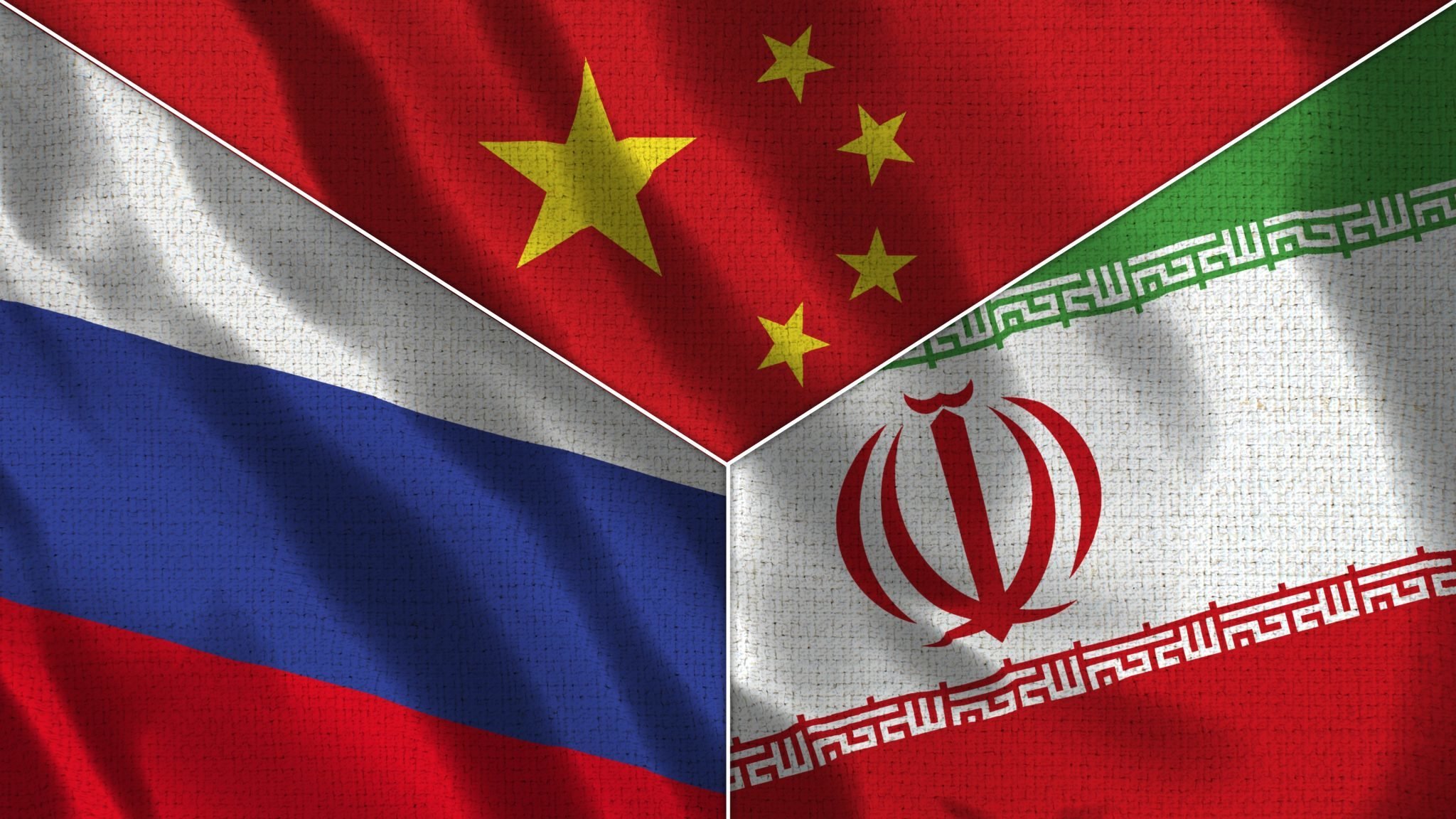
L'IRAN développe la BOMBE ATOMIQUE la RUSSIE et la CHINE LES SOUTIENNENT
L’Iran fait appel à l’appui diplomatique de la Russie et de la Chine, face au projet de résolution qui condamnerait le pays, défendu par les États-Unis devant l’Agence internationale de l'énergie atomique, qui doit se réunir à Vienne lundi.
La réunion, des gouverneurs de l’Agence internationale de l’énergie atomique (AIEA) s’annonce des plus tendues. Les États-Unis et les trois pays européens signataires de l’accord de Vienne de 2015 sur le nucléaire iranien, dont la France , pourraient mettre au vote une résolution condamnant l’Iran pour son refus de coopérer avec l’agence onusienne. Selon le dernier rapport du secrétaire général de l’AIEA, des traces de radioactivité ont été décelées sur trois sites iraniens non autorisés à y développer des activités nucléaires.
Un autre rapport indique que l’Iran est désormais en possession de 43 kg d’uranium enrichi à 60 %, soit 25 % de plus que ce qui avait été obtenu par les centrifugeuses iraniennes il y a trois mois. Ce stock, s’il était enrichi à 90 %, pourrait servir à la fabrication de la bombe atomique. l’éventualité de cet enrichissement « n’est qu’une question de jours, pas de semaines ou de mois ».
En quête d'un soutien politique, l'Iran s'est tourné vers Moscou et Pékin, deux autres signataires du pacte de 2015. Vendredi, le chef de la diplomatie iranienne a appelé son homologue russe, lequel lui a dit sa « ferme opposition » au projet de résolution. La veille, c’était le porte-parole de la diplomatie chinoise qui rejetait toute « confrontation » des Occidentaux avec l’Iran. Ce qui a permis à Hossein Amir-Abdollahian de menacer le chef de la diplomatie européenne, Josep Borrell : le vote d’une telle résolution « provoquerait sans aucun doute une réponse proportionnée, efficace et immédiate de la part de l’Iran ».
A Téhéran, on a très mal digéré l'assassinat le 22 mai, imputé à Israël, d’un colonel des Gardiens de la révolution, organisation qualifiée de « terroriste » par Washington. L’Iran a fait comprendre qu’elle ne signerait aucun retour dans le pacte nucléaire de 2015 si les États-Unis maintenaient ce label. Colère aussi des mollahs lors de la visite vendredi à Jérusalem du chef de l’AIEA, à l’issue de laquelle le Premier ministre israélien a promis que son pays « se réservait le droit […] de bloquer » le programme nucléaire iranien. Est-ce la montée des périls en Ukraine qui est en cause ? Rarement, en tout cas jusqu’à présent, le décalage aura été aussi net dans ce dossier entre les Occidentaux d’un côté et la Russie et la Chine de l’autre.

https://www.google.com/am[...]ombe-atomique-4115677.amp
L’Iran fait appel à l’appui diplomatique de la Russie et de la Chine, face au projet de résolution qui condamnerait le pays, défendu par les États-Unis devant l’Agence internationale de l'énergie atomique, qui doit se réunir à Vienne lundi.
La réunion, des gouverneurs de l’Agence internationale de l’énergie atomique (AIEA) s’annonce des plus tendues. Les États-Unis et les trois pays européens signataires de l’accord de Vienne de 2015 sur le nucléaire iranien, dont la France , pourraient mettre au vote une résolution condamnant l’Iran pour son refus de coopérer avec l’agence onusienne. Selon le dernier rapport du secrétaire général de l’AIEA, des traces de radioactivité ont été décelées sur trois sites iraniens non autorisés à y développer des activités nucléaires.
Un autre rapport indique que l’Iran est désormais en possession de 43 kg d’uranium enrichi à 60 %, soit 25 % de plus que ce qui avait été obtenu par les centrifugeuses iraniennes il y a trois mois. Ce stock, s’il était enrichi à 90 %, pourrait servir à la fabrication de la bombe atomique. l’éventualité de cet enrichissement « n’est qu’une question de jours, pas de semaines ou de mois ».
En quête d'un soutien politique, l'Iran s'est tourné vers Moscou et Pékin, deux autres signataires du pacte de 2015. Vendredi, le chef de la diplomatie iranienne a appelé son homologue russe, lequel lui a dit sa « ferme opposition » au projet de résolution. La veille, c’était le porte-parole de la diplomatie chinoise qui rejetait toute « confrontation » des Occidentaux avec l’Iran. Ce qui a permis à Hossein Amir-Abdollahian de menacer le chef de la diplomatie européenne, Josep Borrell : le vote d’une telle résolution « provoquerait sans aucun doute une réponse proportionnée, efficace et immédiate de la part de l’Iran ».
A Téhéran, on a très mal digéré l'assassinat le 22 mai, imputé à Israël, d’un colonel des Gardiens de la révolution, organisation qualifiée de « terroriste » par Washington. L’Iran a fait comprendre qu’elle ne signerait aucun retour dans le pacte nucléaire de 2015 si les États-Unis maintenaient ce label. Colère aussi des mollahs lors de la visite vendredi à Jérusalem du chef de l’AIEA, à l’issue de laquelle le Premier ministre israélien a promis que son pays « se réservait le droit […] de bloquer » le programme nucléaire iranien. Est-ce la montée des périls en Ukraine qui est en cause ? Rarement, en tout cas jusqu’à présent, le décalage aura été aussi net dans ce dossier entre les Occidentaux d’un côté et la Russie et la Chine de l’autre.
https://www.google.com/am[...]ombe-atomique-4115677.amp
